Poster paper looks simple. It is, after all, just the material carrying an advertisement from the printer to the wall, billboard or display space. But anyone who has worked with large-format printing knows that the paper can make a real difference. A poster may look sharp on screen but lose color after printing. Ink may take too long to dry, the paper may curl during production, or an outdoor poster may struggle when it encounters moisture. These problems are not always caused by the printer or the ink alone. In many cases, the paper itself is part of the equation. That is why choosing poster paper should go beyond comparing price, grammage or brightness. The better question is: Does this paper work well with my printer, ink, application and working environment? With more than 20 years of experience in coating technology, NAISI develops coated advertising printing media for different printing and display applications. Here are some of the key things worth considering before choosing a poster paper for your next project.
What Is Poster Paper?
Poster paper is a coated printing paper made for advertising graphics, promotional posters and large-format images. Unlike ordinary paper, its coated surface is designed to interact with ink in a more controlled way. This can affect how quickly ink is absorbed, how clearly details are reproduced and how colors appear on the finished poster. Poster paper is commonly used for:
- Retail and promotional advertising
- Outdoor billboards and street posters
- Bus shelters and transportation advertising
- Shopping malls and commercial displays
- Events and exhibitions
- Brand campaigns and temporary promotions
The important thing is that there is no single poster paper that fits every situation. A poster displayed inside a shopping mall does not face the same conditions as one installed at a bus shelter. An indoor promotional campaign may focus mainly on image quality and production cost, while an outdoor project may place much more emphasis on opacity, moisture resistance and handling strength. The application should always come first.
Blue Back Poster Paper: Why Is the Back Blue?
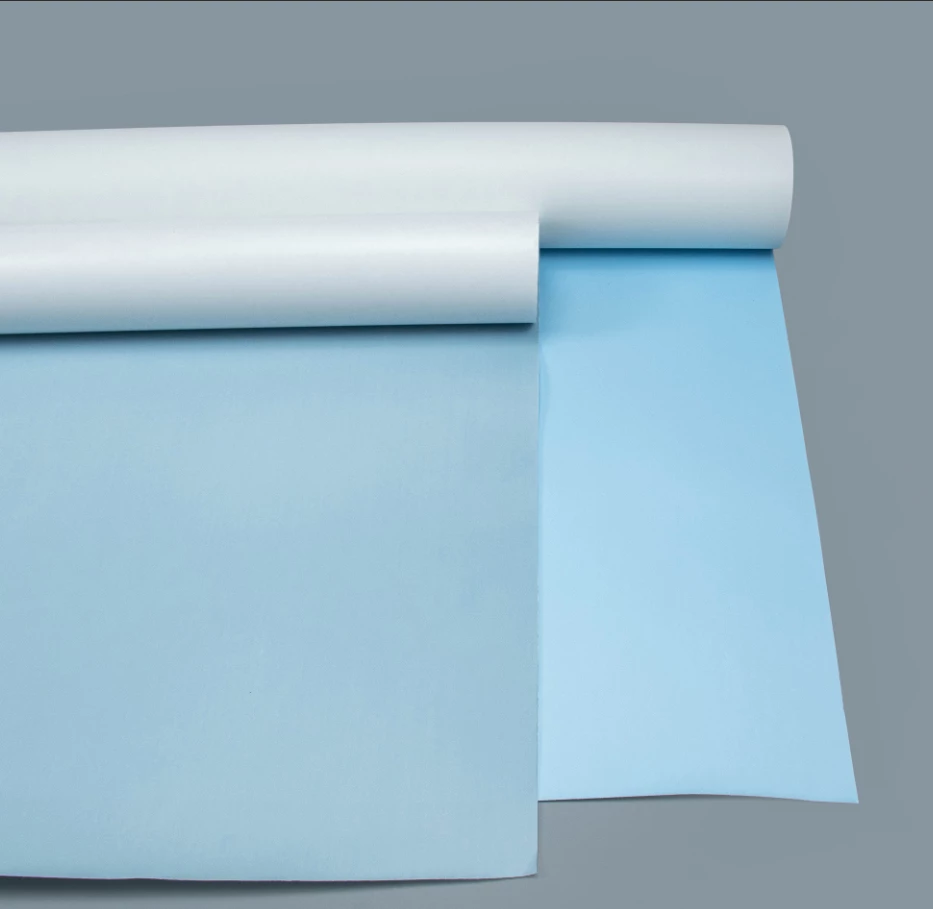
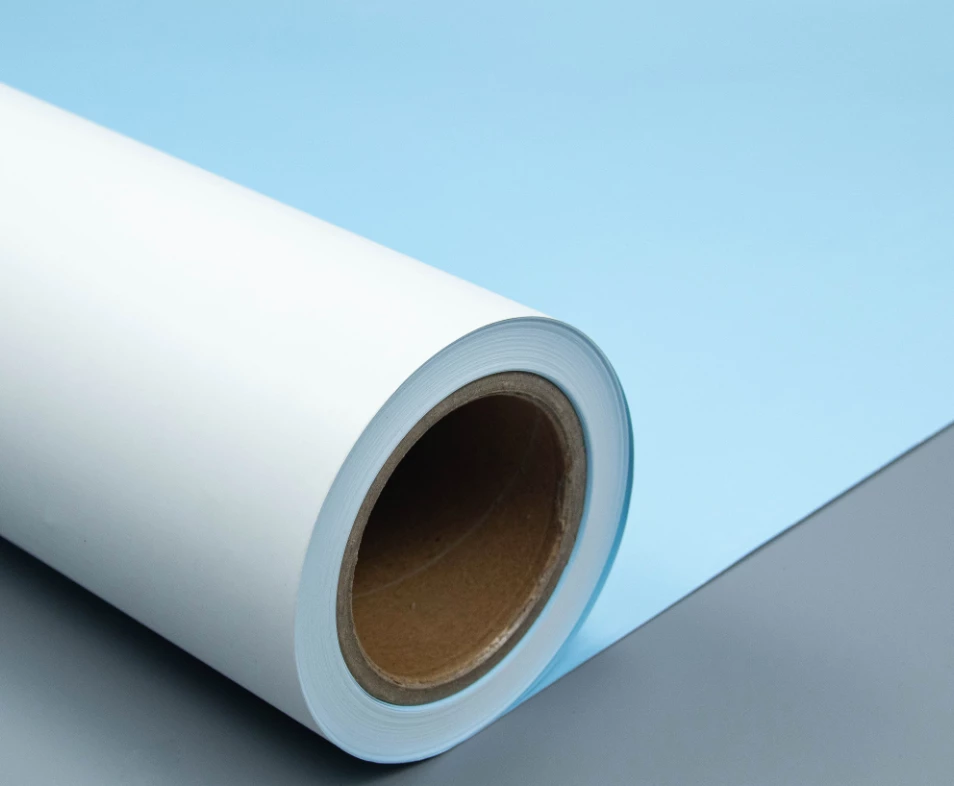
One of the most recognizable types of advertising paper is Blue Back Poster Paper. As the name suggests, the reverse side of the paper has a blue backing. This is not simply a visual feature. It serves an important practical purpose: helping block out what is underneath the poster. Outdoor advertising is often installed over existing posters, painted surfaces or other advertising materials. Without sufficient opacity, the old image can show through the new one, affecting the appearance of the advertisement. The blue backing helps create a cleaner visual background, making the new printed image easier to see.
What Makes Blue Back Poster Paper Useful?
High opacity
The blue reverse side helps reduce show-through from existing graphics and darker backgrounds. This is particularly useful when posters are replaced regularly.
Options for moisture-sensitive applications
Outdoor posters may encounter humidity, light rain or occasional moisture during their service life. Selected water-resistant grades can provide additional protection in these conditions.
Good printability
The coating plays an important role in how ink behaves on the paper. A well-balanced coating can help support ink absorption, color reproduction and image detail across large-format graphics.
Different specifications for different jobs
Not every printer or project requires the same paper. Different grammages and specifications give printers more flexibility when choosing a material for their equipment and application.
Waterproof Poster Paper: Is It Really Waterproof?
This is an important distinction when choosing paper for outdoor advertising. Standard paper is naturally sensitive to moisture. Once water gets into the paper structure, it can soften the material, affect its flatness and change the appearance of the finished poster. For outdoor applications, specially treated base paper and coating systems can improve resistance to moisture. NAISI's water-resistant Blue Back Poster Paper options are designed for advertising applications where additional moisture resistance is needed. But it is worth remembering that water-resistant and completely waterproof are not necessarily the same thing. A poster exposed to occasional humidity is very different from one sitting outdoors through heavy rain for weeks. Rainfall, exposure time, temperature, humidity, installation method and even the way the finished poster is handled can all affect its actual service life. For this reason, it is always better to look at the specific product grade rather than assuming that every water-resistant poster paper will perform in exactly the same way. If the poster will be used outdoors for an extended period, testing a printed sample under conditions close to the real application can provide a much clearer answer.
How to Choose the Right Poster Paper
There is no need to make poster paper selection complicated. Start with the things that actually affect your production. Think about four questions: What printer are you using? What ink are you using? Where will the poster be displayed? How long does it need to last? Once these are clear, choosing the right specification becomes much easier.
Start With Your Printer and Ink
Paper and ink work together. A paper that performs well on one printing system may not give exactly the same result on another. Different ink technologies have different requirements for absorption, drying and adhesion. Depending on the product grade, Blue Back Poster Paper may be used with printing technologies such as Eco-solvent, Solvent, UV and Latex, as well as traditional screen printing. Before production, check the recommended printing method for the specific grade you are considering. For example, NAISI's 125gsm Blue Back Poster Paper is developed for advertising applications where opacity, printability and ease of handling need to work together. For high-volume production, consistency becomes especially important. Stable coating quality and reliable paper feeding can help keep the printer running smoothly and reduce unnecessary waste. And there is one simple step that is often worth more than a long specification sheet: run a sample on your own machine. Look at how the ink dries. Check adhesion. Compare color density and image detail. Pay attention to whether the paper feeds smoothly and whether the finished print remains flat. A short sample test can often tell you more than choosing paper based on specifications alone.
Don't Choose Grammage by Number Alone
Grammage, measured in grams per square metre (gsm), is one of the first specifications buyers usually look at. But heavier does not automatically mean better. A higher grammage generally gives the paper more stiffness and a more substantial feel, while a lighter grade can be easier to handle and may make sense for high-volume production. The right choice depends on the poster size, installation method, printer, handling requirements and overall project budget. NAISI offers Blue Back Poster Paper options including 125gsm and 145gsm. 125gsm is a practical option when you want a balance between handling, material consumption and opacity. It can be considered for billboards, promotional campaigns and large-volume poster production, depending on the specific application. 145gsm provides a stiffer and more substantial sheet, which can be useful when the finished poster needs additional handling stability.
There is another detail that is easy to overlook: roll dimensions. Roll width, roll length and core size all need to work with the printer and the finished poster format. Choosing the wrong dimensions can create unnecessary trimming, handling problems or material waste. Before placing a bulk order, confirm the available grammage, roll dimensions and packaging specifications for the exact product grade.
3. Think About Where the Poster Will End Up
A good print in the production room does not automatically mean a good poster in the real world. Indoor and outdoor applications place very different demands on paper. For shopping malls, retail stores, exhibitions and indoor promotional displays, you may care more about:
- Color and image quality
- Surface appearance
- Paper flatness
- Dimensional stability
- Ease of printing and handling
Outdoor advertising is a different story. Billboards, bus shelters and street posters may need better opacity and moisture resistance. The poster may also have to remain stable through changing temperature and humidity. This is where Blue Back Poster Paper can be particularly useful. Its blue reverse side helps reduce show-through from whatever is underneath, while selected water-resistant grades provide additional protection when moisture is a concern. For projects that require a little more stiffness, a heavier specification such as 145gsm may also be worth considering. Still, the actual conditions matter more than the product name. If a poster is going to spend weeks outdoors, a realistic sample test is always a sensible step before moving into large-scale production.
Why Choose NAISI Poster Paper?
For a printing company, the paper is more than a consumable. When you are producing hundreds or thousands of posters, small differences in paper behavior can become very noticeable. Stable feeding, consistent coating, predictable ink performance and reliable handling all contribute to a smoother production process. That is the thinking behind NAISI's poster paper range. With more than 20 years of experience in coating technology, NAISI develops coated printing media for advertising and large-format applications. Our product range includes different Blue Back Poster Paper specifications for different printing systems and application requirements. We also understand that customers do not always need exactly the same thing.
A printing company may be looking for a reliable material for daily production. A distributor may need several specifications for different markets. An advertising material wholesaler may be more concerned with stable supply and consistent product quality. That is why, alongside standard products, NAISI provides product selection support, OEM/ODM services and customized printing media solutions. The goal is simple: help you find a paper that makes sense for the way you actually print and use it.
Find the Poster Paper That Fits Your Application
Choosing poster paper does not have to come down to finding the cheapest option or the heaviest paper. Start with the application. Look at the printer and ink. Consider where the poster will be displayed and how long it needs to perform. Then choose the grammage, coating and water-resistance level that match those requirements. If you are looking for Blue Back Poster Paper, water-resistant poster paper or other coated advertising printing media, you can explore the NAISI Product Center or contact our team for product specifications, samples and quotations. The right paper is not necessarily the paper with the most impressive specification sheet. It is the one that works reliably when it goes into your printer—and keeps working when the finished poster reaches the real world.