Archive

News

News • November 27, 2026

From 50 Posters to 5,000: What Changes When a Print Job Scales Up?

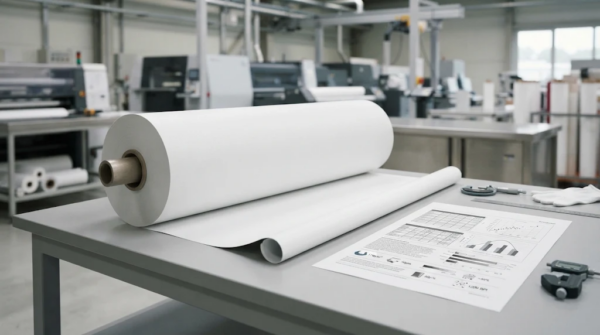
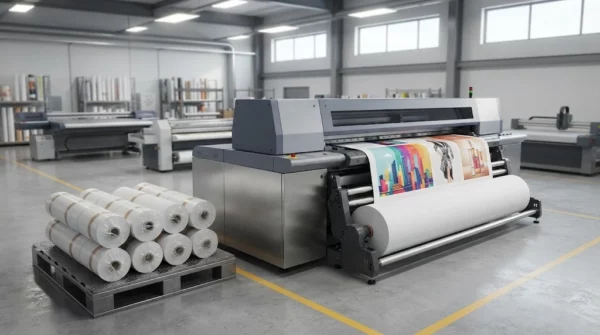
A print shop can produce 50 posters with a relatively simple workflow. The operator loads the media, checks the artwork, adjusts the printer settings and monitors the output. If something needs correcting, there is usually enough room to pause, make an adjustment and restart. Now consider an order for 5,000 posters, possibly using several rolls of media and requiring delivery within a fixed deadline. The equipment may be the same, but the production challenge is completely different. At this volume, a successful first print is only the starting point. The real test is whether the same result can be maintained across every roll, shift and finishing stage. A small difference in coating behaviour, ink drying or media dimensions may be difficult to notice on a few samples. Repeated across thousands of copies, however, it can create visible inconsistencies, production delays and substantial material waste. This is the fundamental difference between short run vs high volume printing. Small jobs reward flexibility and quick adjustments. Large jobs depend on repeatability, process control and reliable coordination. The operator is no longer managing a series of individual prints; the production team is managing an entire system in which printing, drying, cutting, packing and delivery must work together. Scaling up also changes the way materials should be evaluated. A substrate that performs well during a short test may not necessarily be the best choice for continuous production. Long-run stability, roll-to-roll consistency, drying performance and handling characteristics become just as important as print quality. So what actually changes when an order grows from 50 posters to 5,000? The answer lies in how the production priorities, equipment settings and supply arrangements are planned before the first full roll enters the printer.

Read more →
News • November 26, 2026

How to Reduce Offcuts When a Campaign Uses Several Poster Sizes

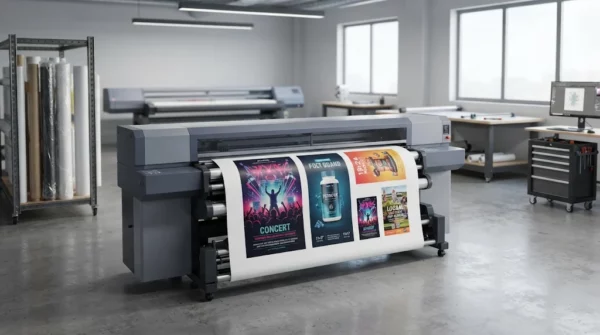
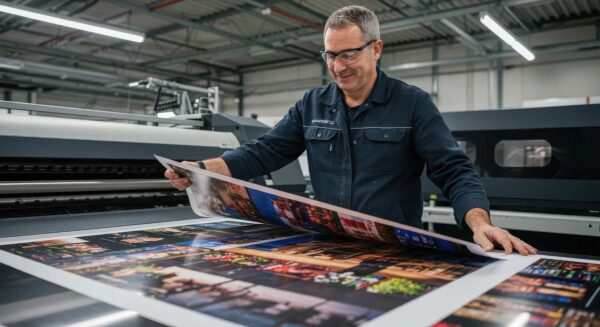
A large advertising campaign rarely relies on just one poster size. A retail promotion may need A0 and A1 posters for shop windows, smaller graphics for counter displays, backlit prints for illuminated signs and custom-shaped stickers for different display areas. Each item may look straightforward when ordered individually. The challenge begins when they all need to be produced from the same stock of wide-format printing media. For print shops, the obvious approach is to process each size separately. It keeps individual jobs easy to manage, but it can leave considerable amounts of unused material along the roll edges and between printed panels. These leftover strips, commonly known as print offcuts, may be too narrow or too short to use for another job. Across a large campaign, the accumulated waste can become a significant production cost. The problem is not necessarily the amount of material being printed. It is how efficiently the different graphics are arranged across the available roll width and length. Reducing print offcuts requires planning before the first roll reaches the printer. The print shop needs to understand the combination of finished sizes, compare those dimensions with standard master roll widths and determine how different designs can share the same printing layout. Finishing requirements, cutting allowances and the usable width of the media must also be considered. This article explores a practical approach to multi-size poster layout planning, from selecting suitable roll widths to reducing longitudinal and cross-web waste. The objective is not simply to fit more graphics onto a sheet. It is to make better use of every metre of printing media without compromising finished dimensions, print quality or production efficiency.

Read more →
News • November 25, 2026

Printer, Ink or Substrate? A Practical Way to Trace Common Print Defects

A print job starts showing uneven colour, blurred edges or strange marks across the image. The operator stops the machine, checks the material and perhaps opens a new roll. But after loading it, the same problem appears again. Sound familiar? In a busy print workshop, the substrate is often the first thing to be blamed. After all, it is the material everyone can see. But print quality depends on several things working together: the printer, ink, substrate and surrounding environment. A problem in any one of them can produce a similar-looking defect. The difficult part is that the symptom rarely tells you exactly where the problem started. Ink bleeding, for example, may be related to the coating, but it can also result from excessive ink limits or an unsuitable print profile. Banding may point to printhead alignment, yet an uneven media surface can produce a similar visual effect. That is why effective print defect troubleshooting starts with observation rather than replacement. Instead of changing several settings at once, isolate the variables. Check whether the defect follows the material, remains with the printer or changes with environmental conditions. This approach does not require complicated testing equipment. It requires a consistent method: identify the defect, form a likely explanation, change one variable at a time and compare the results. Here is how to distinguish common substrate-related problems from mechanical, ink-related and environmental issues.

Read more →
News • November 24, 2026

The First 10 Metres of a New Roll: What Print Operators Should Check Before Full Production

A new roll of printing media can look flawless when it comes out of the packaging. The edges appear clean, the surface looks smooth, and there is no obvious sign of damage. But once the roll is mounted on the printer, the real test begins. A slight edge deviation can cause tracking problems. Uneven winding may lead to wrinkles. Dust or coating marks can show up in solid-colour areas, while unexpected ink behaviour may affect drying time and print quality. These problems are not always visible during a quick inspection of the packaged roll. Some only become apparent when the media starts feeding or when the first test print comes out. That is why the first ten metres deserve more attention than they usually receive. Rather than treating them as wasted material or a routine warm-up, think of this short section as a production checkpoint. It gives the operator time to see how the media unwinds, whether it stays flat on the platen, and how it responds to ink, heat and vacuum settings. A few minutes spent checking a new roll can prevent much bigger problems later: wasted media, repeated adjustments, damaged prints and, in more serious cases, printer head strikes. The process is straightforward. Start with the physical condition of the roll and its feeding behaviour. Then move on to a short test print under the intended production settings. Here is what to look for before committing the full roll to a job.

Read more →
News • November 23, 2026

Six Questions to Ask When Two Printing Media Quotes Look Almost the Same

When two suppliers quote the same width, the same GSM, and nearly the same price, choosing between them can be difficult. On paper, the offers appear interchangeable. Yet once the material hits the production floor, hidden differences in raw material purity, coating performance, and manufacturing control quickly surface. Comparing media quotes requires looking beyond the price per roll or square metre. A lower quote offers immediate savings, yet those savings vanish if the material causes frequent press adjustments, high waste, reprints, or delivery delays. Conversely, a higher price does not automatically guarantee superior quality. Buyers need concrete technical and commercial data to understand what they are paying for. For wide-format businesses, effective printing substrate evaluation examines both material engineering and supplier reliability. Two rolls with identical headline numbers may rely on entirely different base structures, coating formulations, and quality-control protocols. The following six questions provide a practical framework for B2B buyers, focusing on substrate specifications and supply reliability to ensure purchasing decisions are driven by real production performance rather than price alone.

Read more →
News • November 19, 2026

Will the Roll Fit Your Printer? Core Size, Outer Diameter and Roll Weight Explained?

A roll can match your required width and GSM and still fail before the first metre is printed. The problem may have nothing to do with ink compatibility or coating quality. It can be as simple as the core not fitting the spindle, the outer diameter exceeding the printer’s clearance, or the total roll weight going beyond the machine’s handling capacity. These are not minor specification details. They determine whether the roll can be loaded and run in the first place. Printer compatibility is often checked too late, after the quotation has been approved and the material has been ordered. That is the wrong sequence. Width, length and surface finish affect the finished application, but core size, outer diameter and roll weight determine whether the material can enter the production process at all. A roll that arrives at the workshop but cannot be mounted is not a production asset. It is a storage problem. A safer approach is to treat these three measurements as essential items on every purchase order. Never assume that “standard” means compatible. A wider roll is not necessarily heavier, and a smaller core is not automatically easier to handle. Each printer has its own spindle design, housing clearance, feed system and load limits. Confirm the requirements before ordering long rolls or heavy substrates. The aim is not to avoid large rolls, but to make sure they can be used safely and efficiently once delivered.

Read more →
News • November 18, 2026

Roll Width vs. Printable Width: How Much of a Media Roll Can You Actually Use?

You order a 1,620 mm roll, prepare the artwork to fit, and load it onto the printer. Then the operator points out that the last few millimetres on either side cannot be used. The layout needs adjusting, and a job that looked straightforward suddenly becomes more complicated. This is a familiar problem in wide-format printing. The width printed on the roll label tells you how wide the material is, but it does not necessarily tell you how much of that width you can use for printing. The difference between nominal roll width and effective printable width can affect panel layouts, material consumption and the final cost of a job. The gap is not always caused by poor media quality or a printer limitation. Pinch-roller positions, media tracking, edge stability and finishing requirements all play a part. Understanding these factors before production starts makes it much easier to plan artwork, estimate material needs and avoid last-minute adjustments.

Read more →
News • November 17, 2026

How to Read a Wide-Format Media Datasheet Before You Place an Order

A technical datasheet lands in your inbox. It looks professional, with GSM, thickness, tensile strength, opacity and fire ratings neatly listed in a table. On paper, the material seems to meet every requirement. But once it reaches the workshop, it curls under the heater, blocks after rewinding or fails to bond properly with the laminating film. This is where buyers need to look beyond the numbers. A print media datasheet describes a material's properties under specified test conditions. It does not automatically guarantee how the media will perform on your printer, with your ink system, at your production speed or in your finishing process. Knowing how to read a wide-format media TDS means understanding what each specification tells you, what it leaves out and which details need to be confirmed before ordering. The goal is not to turn every buyer into a laboratory technician. It is to make a more informed purchasing decision and reduce the risk of problems during printing, finishing and installation.

Read more →