What Is the Difference Between Grey Back Display Film and Blockout Film?
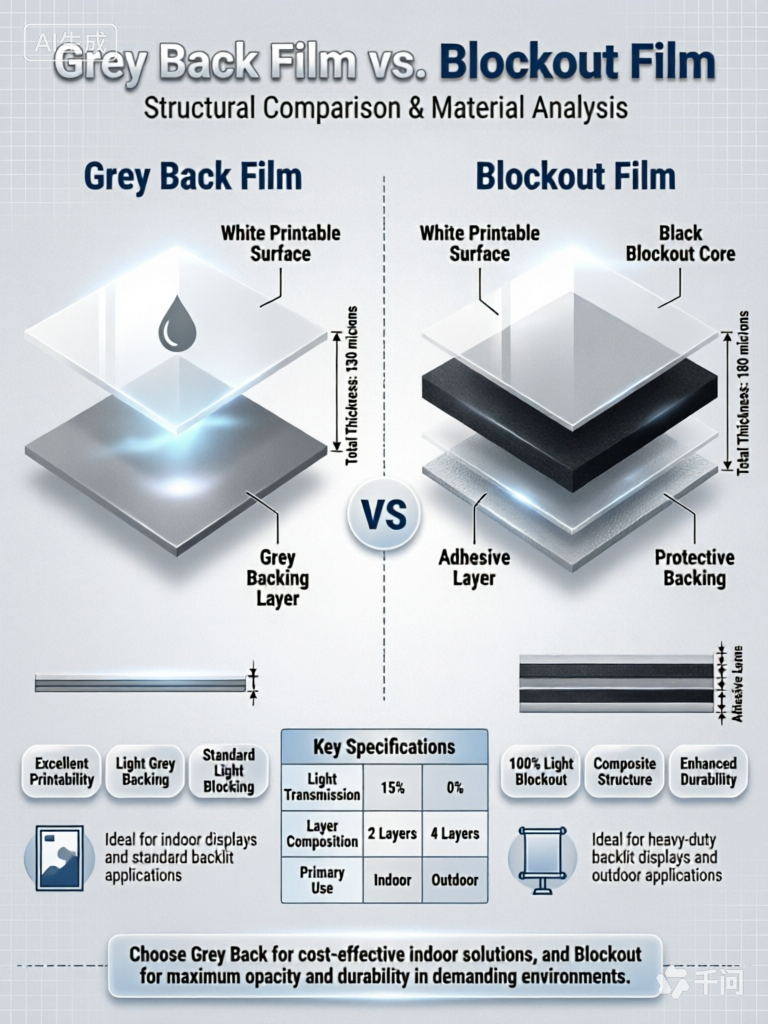
The main difference lies in what each material is designed to block. Grey Back Display Film uses a grey or dark backing layer to reduce the visibility of objects and colours behind the printed surface. It is commonly used for roll-up banners, X-stands and exhibition graphics where a clean, consistent image is important. Blockout Film, on the other hand, is designed for applications requiring a higher level of opacity. It helps prevent light transmission that could affect the appearance of printed colours, particularly when a graphic is exposed to strong light from behind. In simple terms, Grey Back Film helps reduce visual interference from the background, while Blockout Film is intended for more demanding light-blocking requirements.
How Grey Backing Helps Improve Display Opacity
Grey Back Display Film typically combines a printable front surface with a grey backing layer. Depending on the product structure, it may also include a supporting core to improve dimensional stability. The grey backing helps reduce show-through from stand frames, wall colours or previous graphics. This is particularly useful when printing designs with large white areas or light-coloured backgrounds. Different material structures offer different advantages
PVC/PET Greyback: Combines a printable PVC surface with a PET core, balancing printability and dimensional stability. PP Greyback: A lightweight and cost-conscious option for indoor promotional displays. PET Greyback: Offers good dimensional stability and is suitable for roll-up banners and exhibition graphics where flatness matters. The right choice depends on the display system, required stiffness and how often the graphic will be installed or reused.
How Blockout Film Achieves Light Blocking Performance
When a display is placed near a window or another strong light source, reducing background show-through may not be enough. Light passing through the film can still affect the appearance of the printed image. Blockout Film is designed for this type of application. A typical composite structure may combine a PET core with PVC printable faces, using different layers to support dimensional stability and printability while limiting light transmission. For buyers, the important point is to check the actual opacity performance rather than rely on the word “Blockout” alone. Film structure, thickness and product specifications all matter.
How to Choose the Right Display Film for Your Application
Once you know the lighting conditions and display requirements, the next step is to consider the material itself. PVC, PET and PP each bring different properties to display film.
How Material Structure Affects Display Film Performance
PVC-based films are widely used in digital printing because of their printability and compatibility with common printing systems. They are a practical choice for many display graphics, although their dimensional stability depends on the formulation and product construction. PET-based films are valued for their dimensional stability. They can help keep graphics flat during installation and repeated use, making them suitable for roll-up displays and exhibition applications. PP-based films are lightweight and can be a cost-effective choice for indoor promotional graphics. Their stiffness and handling characteristics should be considered when selecting film for larger displays. Composite structures bring different materials together to balance printability, stability and opacity. For example, PVC/PET Greyback combines a printable PVC surface with a PET core, while PET/PVC Blockout is designed for applications where light blocking is a priority. Rather than choosing by material name or thickness alone, printers should consider the complete structure and how it performs in the intended display system.
Which Display Film Is Better for Roll-up Displays, Exhibition Graphics and Light-Controlled Applications?
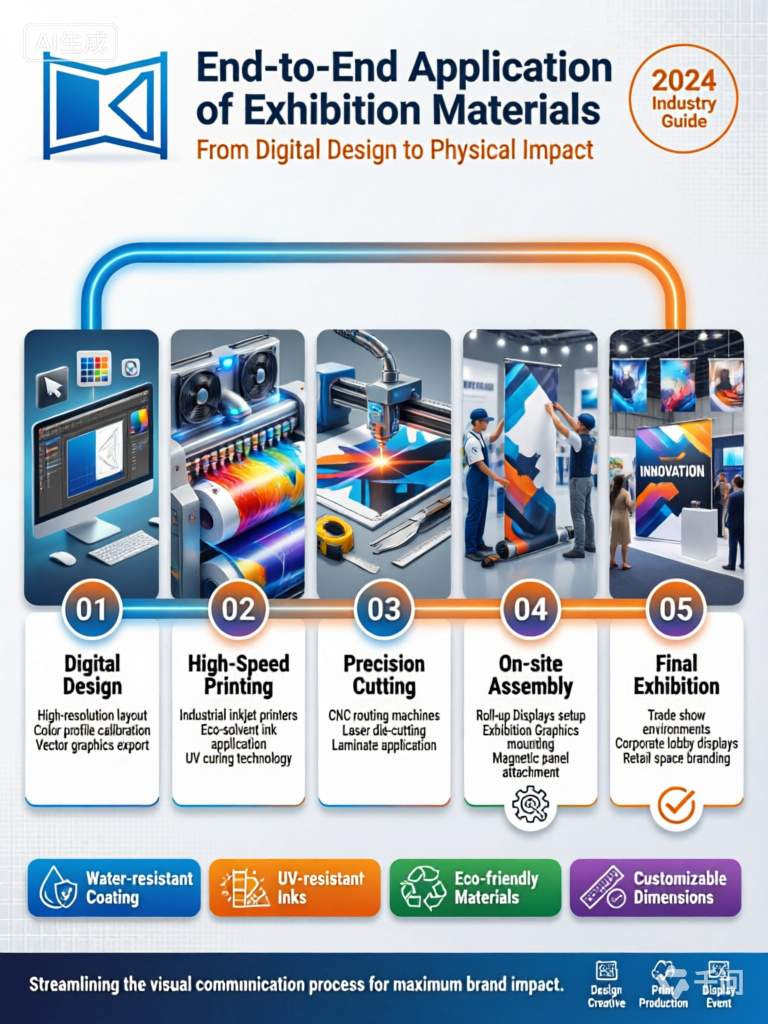
For roll-up displays and X-stands, Grey Back Display Film is often a suitable starting point. Its backing helps reduce the visibility of stand components and background colours, keeping the printed graphic looking cleaner. For exhibition graphics, dimensional stability is also important. Displays are frequently transported, installed and packed away, so the film needs to suit the handling and reuse requirements of the application. PET-based structures are worth considering where flatness is a priority. For light-controlled applications, Blockout Film is the better option to evaluate when preventing light transmission is essential. This may include displays placed in front of windows or other illuminated surfaces. The required level of opacity should be confirmed through product specifications or sample testing.
Choosing Between Grey Back and Blockout Film
The choice comes down to the problem you need to solve: Choose Grey Back Display Film when you want to reduce background show-through from stand frames, walls or existing graphics. Choose Blockout Film when the application requires stronger control over light transmission. Compare material structures to find the right balance of printability, stiffness, flatness and cost. Test before production to check print compatibility, colour appearance and handling performance with your own printer and ink system. NAISI offers a range of Display Film options, including PVC/PET Greyback, PP Greyback, PET Greyback and PET/PVC Blockout. Different structures are available for roll-up displays, exhibition graphics and other advertising applications. If you are selecting film for a specific display project, share your printer and ink system, application and required opacity. Our team can help you identify a suitable option and provide samples or technical specifications for evaluation.